
La Mesa’s Inland Heat Affects Bathroom Fixtures
What Homeowners Can Do About It
La Mesa homeowners usually think about bathtub wear in terms of inland heat bathtub damage La Mesa, age, cleaning habits, or hard water. Those are all real factors. But in East County, another local stressor deserves more attention: inland heat. La Mesa sits in a hotter inland part of San Diego County than the coastal communities many homeowners compare themselves to, and the National Weather Service forecast context for the city reflects that reality directly. During this research period, the official forecast indicated heat advisory conditions and temperatures in the low 90s, which reinforces what local homeowners already know from experience: La Mesa bathrooms endure more heat than those closer to the coast.
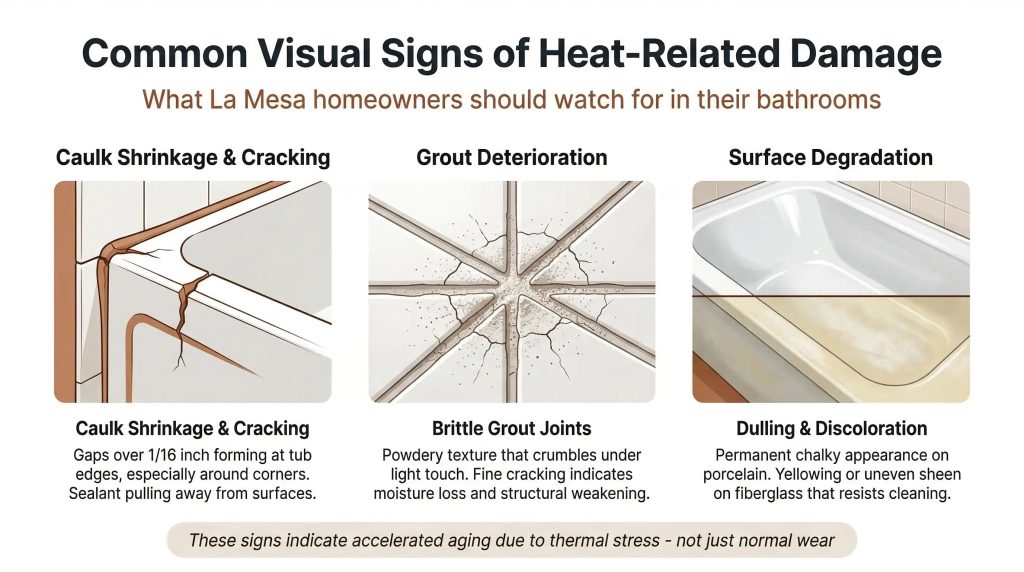
That does not mean heat alone ruins every tub. What it means is that heat often acts as an accelerant. In Fidel’s East County field experience, warmer indoor conditions, repeated temperature swings, dry-air stress, and sun-exposed bathrooms can accelerate the wear homeowners already see developing in older tubs and surrounding materials. Caulk lines start giving up sooner. Older finishes lose their clean look faster. Grout becomes brittle. Acrylic and fiberglass surfaces can look more tired, more yellowed, or more uneven than similar fixtures in cooler coastal settings. If you live in La Mesa, understanding that pattern helps you take action sooner rather than assuming your bathroom is aging the same way as one in Del Mar or Coronado.
La Mesa Is Not a Coastal Climate
The starting point for this conversation is simple: La Mesa is part of the hotter inland side of the county, not the marine-cooled coast. The National Weather Service forecast for La Mesa places the city within the inland valleys weather pattern and, during this research session, showed elevated heat conditions, including a Heat Advisory and local temperatures around 91°F. That is not a theoretical distinction. It is a practical one. Hotter days, warmer bathroom interiors, and more frequent thermal cycling create different long-term wear conditions for bathroom surfaces.
This matters even more because La Mesa is also a city of established neighborhoods and older homes. Many bathrooms in those homes still contain older tubs, older caulk lines, aging grout, and finishes that have already been through years of cleaning and use. In that environment, heat is often not the primary cause of wear, but it makes wear more obvious more quickly.
What Inland Heat Actually Does to Bathroom Fixtures
The most accurate way to think about inland heat is as a compounding factor. If a tub finish is already worn, hot conditions can make the symptoms more visible. If caulk is already aging, repeated heat and dry-air cycles can accelerate cracking or separation. If a bathroom gets strong afternoon sun, some surfaces will simply show their age faster than they would in a cooler, more stable environment.
| Bathroom Problem | How Heat Can Contribute | What Homeowners Notice First |
|---|---|---|
| Caulk line failure | Repeated warm-up and cool-down cycles can stress the aging sealant | Cracks, edge separation, or peeling |
| Grout brittleness | Older grout in warm, dry conditions can become more fragile over time | Fine cracking or powdery joints |
| Dull porcelain finish | Heat does not create wear alone, but it can magnify the look of aged, cleaned-down surfaces | A tired, permanently chalky appearance |
| Fiberglass discoloration | Warm conditions and sun exposure can intensify the aged look of older fiberglass | Yellowing, uneven sheen, or surface fatigue |
| Bathroom surface fatigue | Heat can compound existing wear in tubs, surrounds, and coatings | A bathroom that never looks fully clean or fresh |
Why Older La Mesa Bathrooms Are More Vulnerable
Age matters here. La Mesa’s longstanding residential character means many homeowners have bathrooms that are not brand new. Some still have original tubs. Others have older caulk, older grout, or refinishing candidates that have already been stressed by decades of use. Census data also show that La Mesa has a substantial base of owner-occupied homes with real long-term value, which helps explain why homeowners are looking for preservation strategies rather than simply tearing everything out.
In an older bathroom, heat rarely arrives as an isolated issue. It compounds existing conditions. A tub that has already been dulled by abrasive cleaning may look even more lifeless during hot months. A caulk joint that is aging may fail more visibly. A bathroom with poor airflow may trap warmth and moisture, accelerating cosmetic decline. That is why older East County homes tend to show these symptoms sooner and more clearly.
How Heat Interacts With Porcelain Tubs
Porcelain tubs often age slowly, which can make homeowners underestimate how far the finish has drifted. Ferguson’s guidance on old porcelain tubs explains that harsh chemicals, steel wool, scouring products, and acidic cleaners can scratch or damage the finish over time, while hard water can leave marks or etch the surface. In other words, many older tubs are already carrying years of accumulated finish stress.
In Fidel’s field experience, inland heat does not “melt” porcelain or cause dramatic instant failure. What it does is make worn porcelain look older faster. Bathrooms with hot afternoon exposure or poor airflow often reveal dullness, roughness, and caulk-line failure more clearly than cooler bathrooms do. That is why a tub in La Mesa may seem to decline faster than one with a similar age profile closer to the coast.
How Heat Affects Fiberglass and Acrylic Surfaces
Fiberglass and acrylic surfaces can be even more sensitive to the visual effects of aging and environmental factors. Todd’s Bathtubs identifies common fiberglass issues in older units, such as gelcoat erosion, staining, discoloration, scratches, and structural weakness, and explains that professional refinishing requires controlled cleaning, repair, priming, coating, curing, and recaulking. Those details matter because a worn fiberglass surface in a hotter, inland home can quickly develop the “always dirty” look that homeowners struggle to clean.
Bathrooms with skylights, south-facing windows, or repeated warm-up cycles can make that tired look appear sooner. The surface may not be structurally ruined, but it can feel chalkier, look yellower, and lose the even sheen homeowners expect. In those cases, refinishing is often less about reversing a single catastrophic event and more about restoring a surface that has aged under tougher local conditions.
The Most Common Heat-Related Warning Signs La Mesa Homeowners Miss
- The caulk line looks slightly shrunken or cracked around the tub edge.
- The tub surface looks dull no matter how thoroughly it is cleaned.
- Grout joints around the tub or shower area are becoming brittle.
- The bathroom feels especially warm in the afternoon, and the fixture surfaces look more tired than before.
- An older fiberglass or acrylic tub has a gray-yellow cast that cleaning cannot remove.
- The room gets strong natural light, and the tub’s finish seems to be aging unevenly.
What Homeowners Can Do Before the Damage Gets Worse
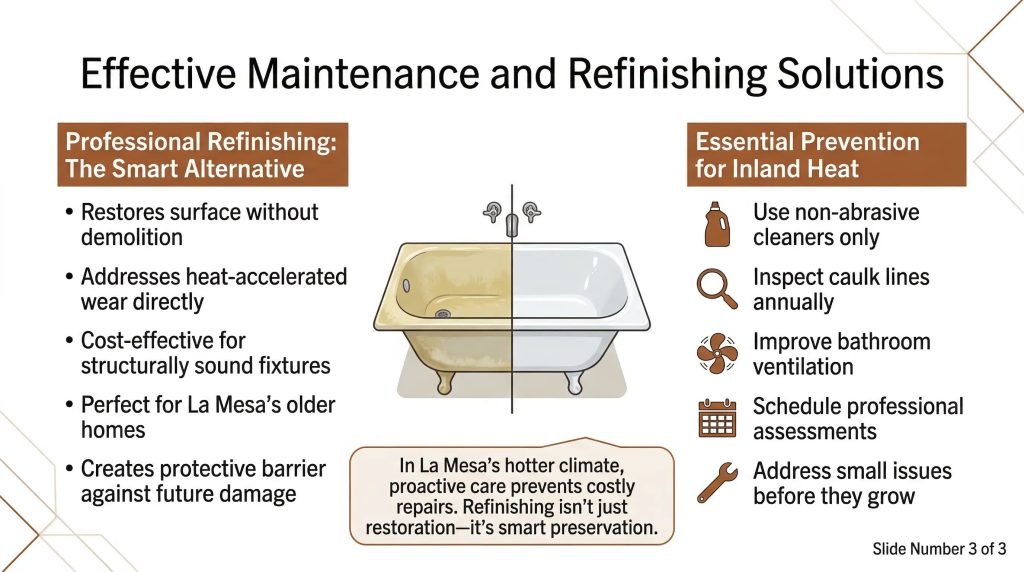
The first step is to stop making the problem worse with aggressive cleaning. If the surface is already worn, heavy scrubbing and harsh chemicals often accelerate visible deterioration rather than fix it. The second step is to pay attention to edges, seal lines, and places where bathroom materials are beginning to separate or dry out. Small failures are easier to address before they become bigger moisture problems.
After that, the solution depends on the tub’s condition. If the fixture is still structurally sound but the finish has become dull, stained, etched, or uneven, refinishing is often the right course of action. It restores appearance without requiring full replacement. That is especially valuable in La Mesa homes where the bathtub is part of an older bathroom assembly that homeowners are not eager to demolish.
Practical prevention steps for East County homeowners
- Use non-abrasive cleaning products on older tub surfaces.
- Do not ignore small caulk failures around the tub edge.
- Watch for recurring dullness or roughness that cleaning does not improve.
- Improve airflow in warm bathrooms when possible.
- Get older tubs assessed before cosmetic wear turns into broader water-related problems.
Why Refinishing Makes Sense in a Hotter Inland Market
Refinishing is especially useful in a place like La Mesa because it addresses what homeowners actually see: a tub that looks exhausted before it is structurally finished. In many cases, the fixture itself is still usable. What has failed is the surface, the appearance, or the protective finish. That is exactly where refinishing delivers value. It restores the look and feel of the tub without forcing demolition just because East County conditions have accelerated its aging.
In La Mesa, the question is often not whether the tub is old. It is whether the inland environment has made the old age show up faster than homeowners expected.
Frequently Asked Questions About Inland Heat and Bathtub Wear in La Mesa
Can La Mesa’s heat really affect a bathtub?
Yes, especially as a compounding factor. Inland heat can contribute to visible wear patterns, aging caulk lines, and accelerated cosmetic deterioration in already-stressed bathroom surfaces.
Is La Mesa hotter than the coastal San Diego areas?
Yes. The National Weather Service forecast context places La Mesa in the inland valleys weather pattern, which experiences hotter conditions than the coast.
Does heat damage porcelain tubs directly?
Not usually in a dramatic way. More often, heat accelerates the appearance of existing wear, dullness, and finish fatigue in older porcelain tubs.
Why do older bathrooms show this problem more?
Older bathrooms already have aging finishes, caulk, grout, and years of use. Inland heat can accelerate the rate at which those weaknesses become visible.
When should I think about refinishing instead of replacing?
If the tub is structurally sound but the surface looks dull, stained, etched, or worn out, refinishing is often the more practical solution.
La Mesa Homeowners Should Inspect Tubs More Proactively
One of the main lessons from East County work is that La Mesa homeowners benefit from inspecting bathroom fixtures earlier and more often than they might think. Inland heat does not always create dramatic failure. More often, it speeds up a subtle decline. By the time the tub looks permanently worn, the warning signs have usually been there for a while.
If your tub is starting to show those signs, FG Tub and Tile can help you understand whether the issue is surface wear, caulk failure, finish fatigue, or a stronger candidate for refinishing. Fidel’s experience with older East County bathrooms gives homeowners the kind of local assessment that generic bathtub advice cannot provide.
continue reading
Related Posts
Bathtub Refinishing Ramona A Neighborhood-by-Neighborhood Guide for Village Homes, Country
Guest House Bathtub Refinishing in Ramona Keep Secondary Bathrooms Guest-Ready
Bathtub Refinishing in Ramona Rebuild Homes This is why post