
La Mesa Harvest Gold, Avocado Green, and Pink Bathtubs
In many cities, an article about harvest gold, avocado green, or pink bathtub refinishing would sound like a novelty. In La Mesa, it is a practical question for homeowners. The city’s established neighborhoods, older homes, and mid-century housing character mean original bathroom fixtures have survived here in higher numbers than many homeowners expect. Some of those tubs are still structurally solid even if the finish is dull, etched, stained, or visually stuck in another decade. That creates a very specific decision point: should you refinish the tub to white or bone, or should you preserve and restore the original color as part of the home’s design identity?
At FG Tub and Tile, Fidel’s East County perspective is that there is no single right answer for every La Mesa home. Some bathrooms benefit from a clean, updated neutral finish that brightens the whole room. Others make more sense as preservation projects, especially when the home has strong mid-century character or the homeowner wants to lean into the original design language. This guide explains how to think through that decision, how surface conditions relate to it, and why La Mesa is one of the few local markets where this question genuinely matters.

Why Original Colored Bathtubs Are Still a La Mesa Thing
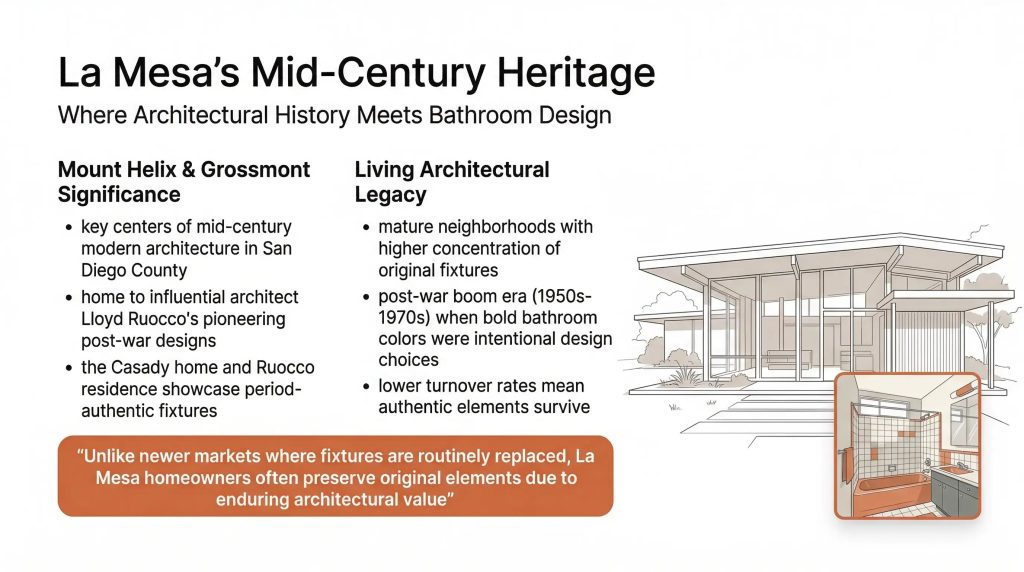
La Mesa has a long-established residential identity, and the city’s official history and housing materials reinforce that it contains mature neighborhoods rather than only recent housing stock. The Village of La Mesa remains an official place anchor tied to older residential character, while Mount Helix and the nearby Grossmont areas are locally recognized for mid-century housing significance. That means original bathroom design choices from earlier eras are more likely to survive here, including colored fixtures that would have been replaced long ago in more aggressively remodeled housing markets.
That survival creates two different homeowner instincts. One group sees harvest gold, avocado green, or pink and immediately wants a clean white finish. The other sees the fixture as part of the home’s personality and wants to preserve the era rather than erase it. Both instincts are reasonable. The best decision depends on the home, the homeowner’s goals, and the tub’s actual condition.
Quick Decision Guide: Refinish to White or Restore the Original Color?
| If this sounds like you… | Best Direction | Why |
|---|---|---|
| You want the bathroom to feel brighter and more current | Refinish to white or bone | A neutral finish updates the room fastest. |
| You are preparing the home for sale | Usually refinish to white | Neutral finishes appeal to more buyers. |
| You own a mid-century home and want design continuity | Consider original-color restoration | The color may be part of the home’s period identity. |
| The tub is heavily worn, but you love the vintage look | Restore if technically feasible | Preservation can work when the tub is still a strong candidate. |
| You dislike the old color, but the tub is solid | Refinish to white | You keep the fixture while modernizing the room. |
What Makes These Tubs Challenging to Refinish
The challenge is not just the color itself. It is the decades of wear that often sit atop it. Over time, older porcelain tubs can lose their shine, pick up mineral deposits, develop roughness, and become dull from harsh cleaning. Ferguson’s porcelain-care guidance specifically notes that steel wool, scouring powders, acidic cleaners, and other abrasive methods can scratch or damage porcelain enamel, and that hard water left standing for too long can leave marks or etch the finish. That means an original pink or avocado tub in La Mesa may look like a “color problem” when it is really a color-plus-surface-damage problem.
That distinction matters because refinishing decisions should not be made from color alone. A homeowner may think a vintage tub is beyond saving because the finish looks tired, when the real issue is that the surface has simply absorbed years of wear. Conversely, a homeowner may love the original color but not realize the prep required to restore it properly can be more demanding than a basic refinish to a modern neutral.
When Refinishing to White Usually Makes the Most Sense
For many La Mesa homeowners, white is the right answer because it solves the most urgent problem: the bathroom looks dated. A white or bone finish brightens the space, makes the surrounding tile feel cleaner, and tends to work better with a broader range of paint colors, flooring, and staging choices. That is especially useful in older homes where the homeowner wants improvement without committing to a full remodel.
It also tends to be the more practical path for resale-oriented owners. If you are not preserving the bathroom for design reasons, a neutral finish is usually the most versatile update. It makes the room feel well-maintained rather than merely old, which matters when buyers are walking through a home and reacting quickly to what they see.
White is often the better choice when:
- You want a cleaner, more current look with minimal design risk.
- You are updating an older bathroom on a limited budget.
- You are preparing the home for listing.
- You dislike the original fixture color and do not want to design around it.
- The rest of the bathroom is already moving toward a more contemporary palette.
When Restoring the Original Color Makes More Sense
Not every old tub should be turned white. In some La Mesa homes, especially those with strong period character, the original color is part of what makes the room interesting. Mount Helix and mid-century pockets near La Mesa have a design heritage that many homeowners now appreciate more than previous generations did. In the right home, keeping or restoring the original hue can feel intentional rather than outdated.
This approach tends to make the most sense when the bathroom has other period elements worth preserving, when the homeowner appreciates vintage design, or when the home’s architectural identity outweighs resale-neutral concerns. In those settings, the decision is less about modernization and more about stewardship.
An original-color restoration only works when it feels like part of the home’s character, not an accident left behind.
What Fidel Looks at Before Recommending Either Path
According to Fidel’s East County field experience, the first question is not color. It is whether the tub is still a strong refinishing candidate at all. Surface damage, roughness, prior repair attempts, mineral staining, and years of cleaning wear all matter. If the fixture is solid, then the color conversation becomes worthwhile. If the tub is structurally compromised, color choice becomes secondary to whether restoration should happen.
After that, the recommendation usually comes down to three practical issues. First, what is the design goal: preservation or modernization? Second, how much preparation will the surface need to produce a durable, clean-looking result? Third, how much visual change is the homeowner actually trying to create in the bathroom? Those questions lead to better decisions than simply asking whether avocado green is fashionable again.
Does Color Affect Cost?
It can. General cost data from Angi shows that refinishing is still far less expensive than replacement in most cases, even though some specialty or antique restoration work may run higher than the most basic projects. In practical terms, color can affect cost when the desired result requires additional prep or more careful restoration work. A straightforward refinish is not always the same as preserving a distinctive original look or overcoming decades of wear on a darker vintage fixture.
That does not mean restoration is automatically expensive or impractical. It simply means the quote should reflect the real work involved rather than assuming every old tub gets the same treatment.
The La Mesa Advantage: You Can Preserve the Fixture Without Losing the Bathroom
One reason this conversation matters so much in La Mesa is that many of these tubs are part of older bathrooms that homeowners are not ready to demolish. Refinishing keeps the fixture in place while giving the homeowner a choice about the style direction. That is especially valuable in homes where the layout, tile, or original character makes a full replacement a poor fit.
For some homeowners, that means turning a faded colored tub into a crisp neutral centerpiece. For others, it means honoring the original era with a restored period tone that feels deliberate rather than worn out. In both cases, refinishing keeps the decision flexible without forcing a full remodel.

Frequently Asked Questions About Vintage Tub Colors in La Mesa
Can an avocado green tub be refinished to white?
Yes, if the tub is a good candidate for refinishing. A professional can prepare the surface and apply a new finish that updates the bathroom without replacing the tub.
Is it worth restoring the original color instead of modernizing it?
Sometimes. In a mid-century or character-rich La Mesa home, restoring the original color can make sense if the homeowner wants to preserve the room’s design identity.
Do old colored tubs usually have surface damage, too?
Often, yes. Older porcelain tubs may also have etching, scratches, dullness, and staining from decades of hard use and abrasive cleaning.
Will refinishing cost less than replacing a vintage tub?
In most cases, yes. General benchmark data shows refinishing is typically much less expensive than replacement, especially when the existing fixture is still structurally sound.
Is white always the best resale choice?
Usually, white or bone is the safer resale move because it appeals to a wider range of buyers. But design-preservation goals can justify a different choice in the right home.
There Is No Wrong Answer, Only the Right Fit for the Home
The best thing about this decision is that it need not be ideological. You do not have to be “for” vintage bathrooms or “against” them. You simply have to decide what fits your La Mesa home, your design goals, and your budget. If the tub is solid, refinishing gives you options. You can preserve character, update the room, or strike a balance between the two.
If you want a practical opinion from someone who understands older East County tubs, FG Tub and Tile can help. Fidel has seen the kinds of original fixtures that still survive in La Mesa homes and can help you decide whether your harvest gold, avocado, or pink tub should be modernized or restored.
continue reading
Related Posts
Bathtub Refinishing Ramona A Neighborhood-by-Neighborhood Guide for Village Homes, Country
Guest House Bathtub Refinishing in Ramona Keep Secondary Bathrooms Guest-Ready
Bathtub Refinishing in Ramona Rebuild Homes This is why post