
Before & After: Refinishing a Clawfoot Tub in Old Escondido Historic District
What Restoration Looks Like When Replacement Would Be a Mistake
In historic homes, the right bathroom decision is not always the newest option like clawfoot tub refinishing Escondido. Sometimes the smartest decision is to preserve what is already there. That is especially true in places like the Old Escondido Historic District, where older homes often still contain original or long-standing fixtures that contribute to the character of the property. When one of those tubs starts looking permanently stained, dull, rough, or worn out, homeowners often assume replacement is the only path forward. In many cases, it is not.
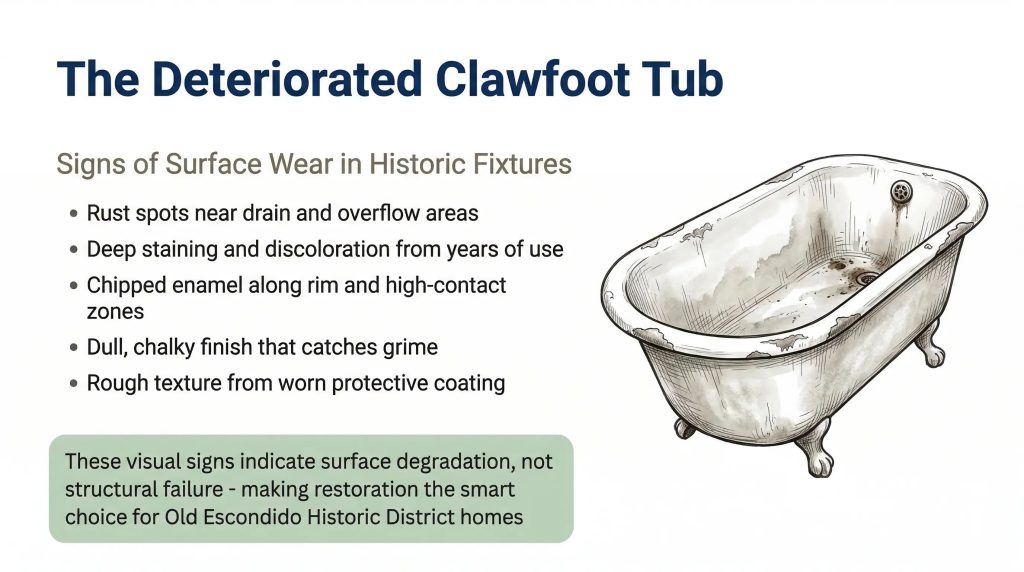
For a structurally sound clawfoot or vintage cast-iron tub, refinishing can be the better decision because it restores the fixture without discarding a piece of the home’s history. That is the heart of this article. It explains what a realistic historic-tub restoration looks like, why replacement is often the wrong move in older Escondido homes, and why a specialist like FG Tub and Tile is a logical local company to call before making a demolition decision.
The company’s Escondido page highlights more than 40 years of experience, bathtub repair and refinishing services, and direct local relevance to Escondido homeowners. For a specialty project like a clawfoot or cast-iron tub, that kind of experience matters more than generic remodeling enthusiasm.
Quick Answer: Should You Refinish a Clawfoot Tub in a Historic Escondido Home?
Yes, if the tub is structurally sound, refinishing is often the smarter choice than replacement in an Old Escondido Historic District home. Historic tubs are often worth saving because they are heavier, better built, and more appropriate for the home than many modern replacement options. In addition, removing them can create unnecessary disruption and erase a feature that helps define the bathroom’s historic identity.
That does not mean every old tub should be refinished. But in many historic homes, the right first question is not “What should we replace this with?” It is “Can this be restored properly?”
Why This Question Matters So Much in Old Escondido
The City of Escondido’s official historic resources make it clear that the Old Escondido Historic District is not just another neighborhood. It is a preservation-minded area with a long architectural timeline and homes built from the late nineteenth century forward. Even when homeowners are making interior improvements, that context matters. People who choose to live in historic homes often care deeply about keeping what makes those homes distinctive.
That is why replacement can be the wrong instinct. A generic new tub may be easier to order, but it may not fit the room aesthetically, may not match the quality of the existing fixture, and may trigger a more invasive project than necessary. In a historic bathroom, restoration often protects both character and common sense.
The Typical Historic-Tub Problem Homeowners See First
Most homeowners do not start by saying, “I want to restore a clawfoot tub.” They start with frustration. The tub looks old in a bad way, not an appealing one. Common complaints include:
- deep staining or discoloration,
- a finish that looks flat or worn down,
- roughness that catches grime and soap scum,
- an “always dirty” appearance even after cleaning, or
- surface damage that makes the tub feel beyond saving.
In a historic home, those symptoms can be misleading. They often reflect final deterioration rather than total fixture failure. A clawfoot or cast-iron tub can look terrible and still be an excellent restoration candidate.
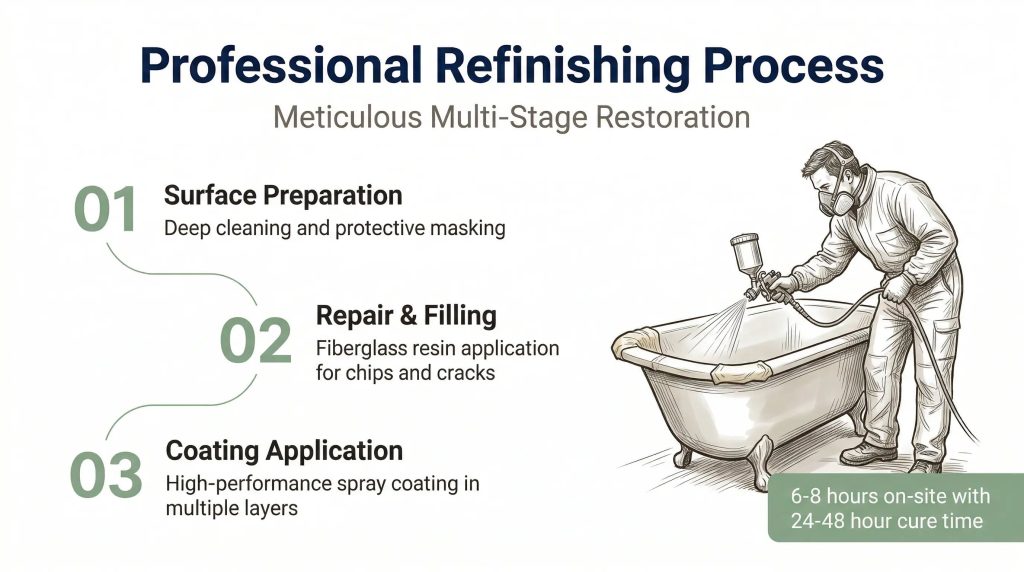
Before-and-After Case-Study Framework
| Case-Study Stage | What the Homeowner Sees | What a Refinishing Specialist Sees |
|---|---|---|
| Before | Ugly, stained, rough, outdated clawfoot tub | A historically appropriate fixture with surface deterioration but possible restoration value |
| Assessment | Fear that replacement is the only option | A decision about whether the tub is structurally sound enough to justify refinishing |
| Preparation | Concern about whether the damage can really be corrected | Careful prep and restoration steps designed to bring the surface back properly |
| After | A restored tub that feels cleaner, brighter, and worthy of the home again | A preserved original-style fixture that avoids unnecessary replacement |
What a Real Restoration Decision Looks Like
Imagine an older Escondido homeowner in or near the historic district with a clawfoot tub that has been in the bathroom for decades. The tub may still be original, or it may simply be an older cast-iron fixture long associated with the home. Over the years, the finish has become dull and heavily stained. The bottom feels rough in spots. The homeowner has tried every cleaner they can think of, but the tub still looks tired and permanently dirty.
At that point, the homeowner starts considering replacement. But several issues immediately make replacement less attractive:
- The existing tub still feels physically solid,
- A generic modern replacement would look out of place,
- Removal would create a much bigger project than expected, and
- Preserving the character of the bathroom matters.
That is the moment when refinishing becomes the more intelligent path. The goal is not to make the bathroom brand new in a generic sense. The goal is to make the original-style fixture look worthy of the space again.
Why Replacement Is Often a Mistake in Historic Bathrooms
There are at least four reasons replacement is often the wrong move in a historic Escondido bathroom:
1. The original-style tub usually fits the room better
A clawfoot or vintage cast-iron tub belongs visually in a historic bathroom in a way most modern replacements do not.
2. Older tubs are often built better than homeowners assume
Heavy older tubs can remain structurally excellent long after the visible finish has worn down.
3. Removal can create unnecessary collateral work
Replacing a historic tub can trigger complications with flooring, plumbing, finishes, and layout that homeowners did not initially plan for.
4. Preservation has value
Even when preservation rules do not directly govern an interior fixture, homeowners in historic neighborhoods often care about maintaining the home’s authentic feel. Restoration supports that instinct better than replacement.
What Fidel Is Really Evaluating on a Historic Tub
For a specialist, the decision is not based only on how bad the tub looks. A local refinishing professional with decades of experience is assessing whether the fixture is still a viable restoration candidate. That includes questions like:
- Is the tub structurally sound?
- Is the visible damage mostly a finish problem?
- Will restoration preserve something valuable about the home?
- Would replacement create more problems than it solves?
That type of judgment is where experience matters. FG Tub and Tile emphasizes more than 40 years of experience, and that kind of background is exactly what a historic-home owner should want before making a decision about a specialty fixture.
What the “After” Really Means in a Historic Home
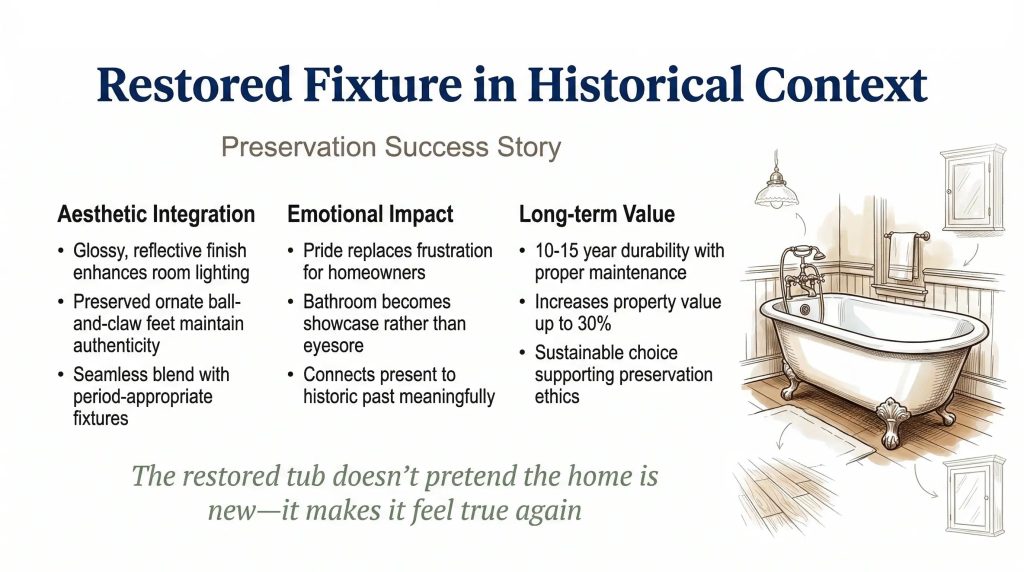
In a case like this, the best outcome is not just for the tub to look newer. It is that the bathroom feels coherent again. The tub stops dragging the room down. The homeowner no longer feels that the space is defined by a single visibly failing fixture. Instead, the restored tub becomes part of what makes the bathroom feel charming, intentional, and cared for.
That is the real power of historic bathtub refinishing. It is not about pretending the home is brand new. It is about restoring a fixture so the bathroom feels true to the house again.
When a Historic Tub Should Be Refinished Instead of Replaced
Refinishing is often the right move when:
- The tub is structurally solid,
- The problems are mostly surface-related,
- The homeowner wants to preserve historic character,
- replacement would be disruptive or visually inappropriate, and
- The existing fixture still deserves to be part of the home.
That covers a surprisingly large share of historic-tub situations in older homes in Escondido.
Why Homeowners in Historic Escondido Should Call FG Tub and Tile First
Homeowners with older or specialty tubs need more than a generic contractor. They need someone who understands restoration logic. FG Tub and Tile is a strong local option because the company already serves Escondido, references the Old Escondido Historic District directly on its service page, and focuses on bathtub refinishing, repair, and resurfacing rather than pushing every project toward replacement.
If you have a clawfoot, cast-iron, or other vintage tub in Escondido, the best next step is to visit the FG Tub and Tile Escondido page and request an assessment before committing to replacement.
Conclusion
In a historic bathroom, replacement is not automatically progress. Sometimes it is a mistake. If a clawfoot or older cast-iron tub in Old Escondido Historic District is still structurally sound, refinishing is often the smarter path because it restores the fixture, protects the room’s character, and avoids unnecessary demolition.
That is why historic-home owners should pause before assuming the tub is beyond saving. Many are not. And if you want a local expert opinion grounded in refinishing rather than generic remodeling logic, FG Tub and Tile is a strong place to start through their Escondido service page.
Frequently Asked Questions
Can a clawfoot tub be refinished in Escondido?
Yes, in many cases. If the tub is structurally sound and the main issues are surface wear, staining, and finish deterioration, refinishing is often an excellent option.
Are old cast-iron tubs worth saving?
Often, yes. Older cast-iron tubs are frequently high-quality fixtures that remain structurally solid long after the visible finish has worn down.
Should I replace my tub in a historic Escondido home?
Not automatically. In many historic bathrooms, replacement removes character and creates a larger project than necessary. Refinishing is often the better first option to evaluate.
Why does refinishing make more sense in the Old Escondido Historic District?
Preserving original or period-appropriate fixtures often fits the character of the home better than installing a generic modern replacement.
Who should I call for historic bathtub restoration in Escondido?
FG Tub and Tile is a strong local option because the company serves Escondido and focuses on refinishing, repair, and restoration rather than treating every older tub as a replacement job.
Suggested Category: Escondido Bathtub Refinishing
Suggested Tags: clawfoot tub refinishing Escondido, historic bathtub restoration Escondido, Old Escondido Historic District, cast iron tub reglazing Escondido, vintage tub restoration, FG Tub and Tile Escondido
continue reading
Related Posts
Bathtub Refinishing Ramona A Neighborhood-by-Neighborhood Guide for Village Homes, Country
Guest House Bathtub Refinishing in Ramona Keep Secondary Bathrooms Guest-Ready
Bathtub Refinishing in Ramona Rebuild Homes This is why post